

FAQs about Manaslu Circuit Trek
20th Dec, 2025
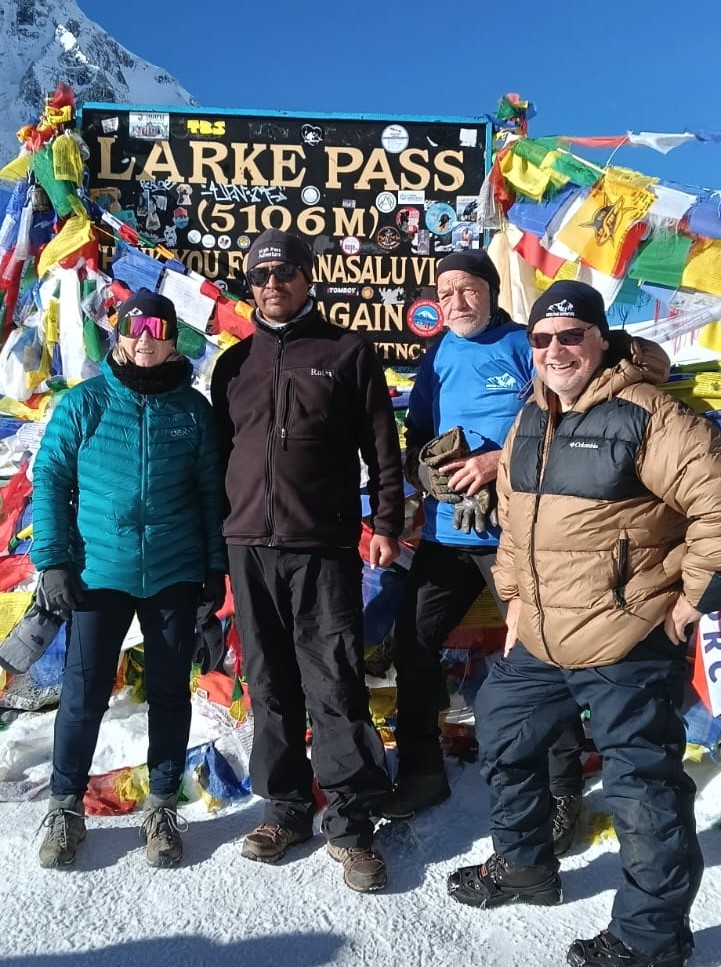
Frequently Asked Questions about the Manaslu Circuit Trek provides valuable information and advice for both first-time and experienced trekkers. By consulting this resource, you can prepare thoroughly, avoid common mistakes, and fully enjoy the breathtaking views, rich Himalayan culture, and the once-in-a-lifetime adventure of circling the world’s eighth-highest mountain, Manaslu (8,163 meters), by crossing the challenging Larke Pass (5,106 meters).
Table of Contents
The Manaslu Circuit Trek is one of the most iconic, off-the-beaten-path, and highly preferred trekking experiences in Nepal, following Everest and Annapurna. Many trekkers have questions before planning this journey, ranging from logistics and safety to difficulty and preparation. Our comprehensive FAQ guide answers the most common questions to help you plan your trek efficiently and confidently.
Why Should I Choose the Manaslu Circuit Trek?
Choosing the Manaslu Circuit Trek means embarking on an incredible journey around the majestic Mount Manaslu range and crossing the iconic Larke Pass (5,106 m), while being rewarded with breathtaking views of Manaslu, Himal Chuli, Sringi, and many other towering peaks.
Along the way, you’ll trek through traditional Nepali villages, terraced farmlands, lush valleys, and the scenic Marsyangdi Valley. You’ll also discover ancient monasteries and vibrant Gurung villages influenced by Tibetan culture, each showcasing unique traditions and spiritual heritage.
This trek is not only about circling Mount Manaslu and conquering Larke Pass, but also about embracing adventure, overcoming physical challenges, and experiencing a deep spiritual connection to the Himalayas. It’s the perfect choice for those seeking a once-in-a-lifetime adventure that blends natural beauty, cultural immersion, and personal achievement.
When Is the Best Time to Do the Manaslu Circuit Trek?
The best time to do the Manaslu Circuit Trek is during autumn (September to November) and spring (March to May). December can also be a good option to complete the trek successfully, though there may occasionally be snow around the Larke Pass (5,106 m).
Both spring and autumn offer incredible opportunities to enjoy natural beauty, cultural richness, and pleasant trekking conditions. In spring, the weather is mild, skies are generally clear, and rhododendrons bloom in vibrant colors, making the trails especially scenic. In autumn, trekkers are rewarded with crisp air, stable weather, and the clearest views of Manaslu, Himalchuli, Himlung, Shringi, and many other Himalayan peaks.
While winter (December to February) is possible, it can be extremely cold with heavy snowfall, making the Larke Pass difficult to cross. Summer/monsoon (June to August) brings rain, leeches, and slippery trails, which makes trekking less favorable.
We (High Pass Adventure) recommend planning your trek in spring or autumn, with December also being a suitable option for those prepared for colder conditions.
How to Start the Manaslu Circuit Trek?
The Manaslu Circuit Trek usually begins with a scenic drive from Kathmandu to Soti Khola or Machha Khola, which serves as the starting point of the trek. After arriving in Kathmandu from your home country, you will first need to arrange the special permits required for the Manaslu Circuit Trek.
From Soti Khola or Machha Khola, the trail follows the classic route through Khorlabesi, Jagat, Deng, Namrung, Lho, Samagaun, Samdo, and Dharmashala before reaching the challenging Larke Pass (5,106 m). After crossing the pass, the trail descends to Bhimthang and continues to Tilche, where you can catch a vehicle back to Kathmandu.
To make the journey smooth, trekkers should book with us at High Pass Adventure, as we arrange all the necessary permits, guides, porters, transport, food, and accommodations. Proper physical preparation, the right trekking gear, and acclimatization days are also essential for a safe and enjoyable adventure.
What Is the Standard Itinerary for the Manaslu Circuit Trek and How Long Is It?
The standard itinerary for the Manaslu Circuit Trek is 15 days. It means 12 days from Kathmandu to Kathmandu. This 12-day plan includes a drive from Kathmandu to Soti Khola at the start and a drive back from Tilche (near Dharapani) to Kathmandu at the end, with one acclimatization day in Samagaun.
In addition, you will need to stay 3 nights in Kathmandu—two nights before starting the trek and one night after completing it.
The Manaslu Circuit Trek can be done in less than 12 days or extended beyond 12 days, depending on your chosen starting and ending points and your available time.
A detailed day-by-day itinerary from arrival to departure for the 12-day trek is provided below.
Day 1: Arrival in Kathmandu and transfer to hotel by private vehicle (1350 m), overnight at hotel
Day 2: Trekking preparation day, including permit processing and gear list check. Overnight at Kathmandu hotel
Day 3: Drive to Arughat- Sotikhola-Machha Khola (870 m) 8/ 10 hours drive. Overnight at tea-house
Day 4: Trek to Jagat (1400 m) 6 -8 hours walk. Overnight at tea-house
Day 5: Trek to Deng (1860 m), 6/7 hours walk. Overnight at tea-house
Day 6: Trek to Namrung (2630 m), 6-7 hours walk. Overnight at tea-house
Day 7: Trek to Lho village (3175 m), 4 hours walk. Overnight at tea-house
Day 8: Trek to Samagaon (3550 m), 4 hours walk. Overnight at tea-house
Day 9: Acclimatizing day at Samagaun.
Day 10: Trek to Samdo (3860 m) 3/4 hours walk. Overnight at tea-house
Day 11: Trek to Larke Phedi (Dharamsala) (4460 m), 4-5 hours walk. Overnight at a tent camp
Day 12: Trek to Bhimthang (3880 m) via Larke Pass (5160 m), 8-9 hours walk. Overnight at tea-house
Day 13: Trek to Tilche (2300 m), 7 hrs walk. Overnight at tea-house
Day 14: Drive to Kathmandu (1350 m), 5-6 hours drive. Overnight at Hotel
Day 15: Final departure to your hometown
How Much Does the Standard 15-Day Manaslu Circuit Trek Cost?
The standard 15-days Manaslu Circuit Trek includes twelve nights on the trail and three nights in Kathmandu, covering your arrival and departure. The cost is USD 1050 per person, based on a minimum of two participants. This price covers the Public transport, guide and porter services, trekking permits, basic twin-sharing accommodations, and three meals a day, including a cup of tea or coffee with each meal. Additional expenses such as hot showers, internet, private attached rooms, extra food and drinks, or luxury accommodations are not included and must be paid by the trekkers. The overall cost can vary depending on factors like the duration of the trek, the level of comfort desired, and whether a private guide or porter is hired. We strive to offer an affordable price while providing the best service for all trekkers who choose to explore Manaslu Circuit with us.
Does the Manaslu Circuit Trip Cost the Same for Foreigners, Indians, and Nepalese Citizens?
The Manaslu Circuit trekking cost is not the same for foreigners, Indian citizens, and Nepalese citizens. While the basic expenses—such as accommodation, guide and porter fees, food, and drinks—remain the same for all trekkers, the major difference comes from the cost of trekking permits, which vary based on nationality.
For foreign trekkers, the standard cost of the Manaslu Circuit Trek following our itinerary is USD 1050 per person. For Indian citizens, the cost is approximately USD 50 less than the standard price, and for Nepalese citizens, the cost is around USD 200 less. These reduced prices for Indian and Nepali trekkers are due to lower permit fees.
If you are planning this trek, we recommend contacting us to receive the most updated cost details customized for foreigners, Indian citizens, and Nepalese trekkers.
How Difficult Is Manaslu Circuit Trek? Is It Suitable for All Trekkers?
The Manaslu Circuit Trek is considered easy to moderately difficult. It requires good physical fitness, strong determination, and the ability to walk 5–8 hours per day for around 10 trekking days, in addition to long drives from Kathmandu to the trek starting point and back to Kathmandu after the trek ends.
The trail is generally well maintained but includes both steep ascents and descents as the altitude gradually increases through villages, farmland, forests, and high-altitude terrain. Some sections—especially from Samdo to Bhimthang while crossing the Larke Pass (5,106 m)—can be more challenging due to high elevation, rocky trails, snow, ice, and occasional snowfall or rainfall. Proper seasonal gear is essential, and hiring an experienced guide and a strong porter is highly recommended to ensure a safe and smooth trek.
This trek is suitable for most trekkers between the ages of 15 and 70, provided they prepare well in advance with fitness training and the right mindset. Acclimatization is key—spending a night in Samagaun and doing short hikes to higher elevations helps minimize the risk of altitude sickness. While the higher sections of the trail (from Samdo to Bhimthang via Larke Pass) are more demanding due to altitude gain and rugged terrain, they are generally manageable for well-prepared trekkers.
With proper preparation, good acclimatization, and the support of a guide and porter, the Manaslu Circuit Trek is not only achievable but also an incredibly rewarding Himalayan adventure.
How Busy Is the Manaslu Circuit Trek Route?
The Manaslu Circuit trekking route is especially busy during the peak trekking seasons—from mid-September to mid-December and March to May. Since the reopening after COVID-19, the trail has been steadily gaining popularity again. These months are considered the best time to trek due to clear skies, stable weather, and stunning mountain views.
Because of the trek’s growing popularity as a classic circuit trek and a great alternative to the Annapurna Circuit, the route can become quite crowded during peak seasons. Additionally, the ascent and descent do not follow the same trail, which increases traffic along different sections of the route.
During these busy periods, trekkers will encounter large numbers of international hikers, along with guides, porters, and pack animals such as donkeys transporting supplies. This lively environment adds to the cultural experience, but trekkers should be prepared for busy teahouses and occasional congestion on the trail.
What types of food are available during the Manaslu Circuit Trek?
A wide variety of food is available during the Manaslu Circuit Trek, ranging from Western dishes to traditional Nepali cuisine. However, meals at Dharmasala (Larke Phedi, 4,460m) are more basic compared to other places along the route. At most stops, every teahouse and lodge offers a menu with similar items, including both local and international options. The cooks are generally skilled, though the taste may differ slightly from Western-style food.
Because meat is scarce and often not very fresh in high-altitude regions, we recommend choosing vegetarian meals. One of the most popular and highly recommended dishes is Dal Bhat, a traditional Nepali meal served with rice, lentil soup, vegetables, pickles, and papad. While the name is the same everywhere, the taste can vary from place to place depending on the quality of rice and vegetables used.
You’ll also find many other options on the menu, such as burgers, pizza, momo (dumplings), soups, potato dishes, some meat items, bakery treats, fried foods, and more.
What types of accommodations are available during the Manaslu Circuit Trek?
A wide range of accommodations is available during the Manaslu Circuit Trek, from basic to relatively comfortable lodges. In this region, “luxury” usually means a room with an attached bathroom in a few places, while hot showers are commonly shared with other guests. Due to the trek’s growing popularity after COVID-19, most lodges are well managed, and there are sufficient accommodation options along the route.
In our standard Manaslu Circuit Trek package, we provide the best available lodges in each village, usually offering private rooms with twin beds and a shared indoor bathroom. In some locations, we are also able to arrange rooms with attached bathrooms. Rooms typically include twin beds with clean bedding, pillows, and blankets.
However, we strongly recommend that trekkers bring a sleeping bag for extra warmth and comfort, especially at higher altitudes such as Dharmasala (Larke Phedi – 4,460 m). The quality of lodges becomes more basic as altitude increases, but we always do our best to ensure comfortable accommodation for all trekkers.
Do I Need Training for the Manaslu Circuit Trek?
Yes, some training is recommended for the Manaslu Circuit Trek, especially if you are a first-time trekker. However, it is not strictly necessary for those with prior trekking experience. The trek does not require any technical climbing skills, so specialized training is not essential for all trekkers.
That said, good physical fitness, the right mindset, and strong determination are highly recommended. Preparing at least one month in advance with regular walking, day hikes, running, biking, jogging, or swimming can be very beneficial and will help ensure a more comfortable and enjoyable trekking experience.
What is the highest point of Manaslu Circuit Trek?
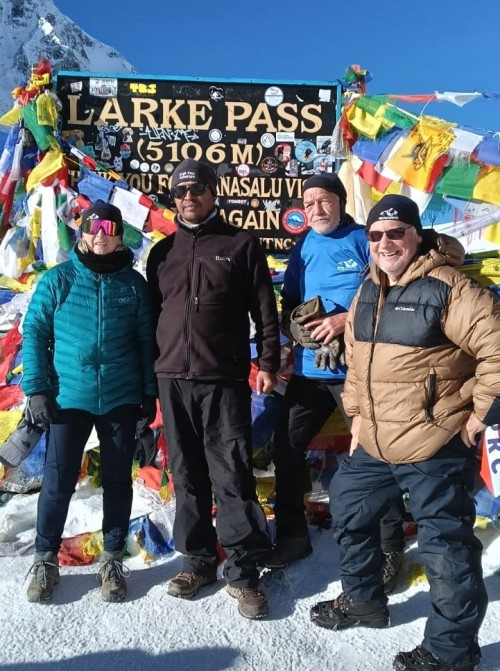
The highest point of the Manaslu Circuit Trek is Larke Pass (5,106 m), located between Dharmasala and Bhimthang. To reach this point, the trek starts from Dharmasala (4,460 m) and takes approximately 3 to 5 hours of ascent. After crossing the pass, the trail descends to Bhimthang (3,860 m), which takes another 3 to 5 hours.
Some trekkers may find this section challenging due to the high altitude and rocky terrain, but the ascent to the top of Larke Pass is gradual and manageable with proper acclimatization.
Do I need any permits for the Manaslu Circuit Trek?
Yes. All trekkers except Nepali citizens are required to obtain four different permits to enter the Manaslu region, and this rule applies specifically to the Manaslu Circuit Trek.
The required permits are:
- Manaslu Restricted Area Permit (Special Permit)
- Manaslu Conservation Area Project (MCAP) Permit
- Annapurna Conservation Area Project (ACAP) Permit
- Local Government (Chum Nubri Rural Municipality) Entrance Permit
Most of these permits are issued in Kathmandu, while the local government permit is obtained after reaching Jagat. The total cost of all permits is approximately NPR 7,000 + USD 100 per person.
These permits are mandatory, as they help regulate tourism, support local communities, and contribute to conservation efforts in the Manaslu region. Without them, you will not be allowed to continue your trek on the Manaslu Circuit.
Are There Any Hospitals or Medical Facilities During the Manaslu Circuit Trek?
There are no proper hospitals along the Manaslu Circuit Trek. However, basic medical facilities are available in Lho Village and Sama Gaun. These facilities provide limited medical services such as first aid treatment and basic care, mainly for emergencies.
The medical facilities are not as advanced as those in major cities, so trekkers should be well prepared, especially for altitude-related issues, and must have travel insurance for safety. In serious cases, helicopter evacuation to Kathmandu may be required. Therefore, we strongly recommend having proper travel insurance that covers high-altitude trekking and emergency evacuation.
Should I bring medicines for the Manaslu Circuit Trek?
Yes, you should bring some medicines for the Manaslu Circuit Trek. If you take any regular medication, make sure to consult your doctor before the trek. While some local medicines are available, they may not be effective for foreigners due to differences in body physiology, climate, and environment. Therefore, we highly recommend that all international trekkers bring their necessary medicines from their home country when trekking in Nepal.
How to avoid altitude sickness in Manaslu Circuit Trek?
To prevent altitude sickness during the Manaslu Circuit Trek, follow our flexible itinerary, drink more water than usual, and walk slowly on ascents. After reaching 3,500 meters, it’s recommended to spend an extra night for acclimatization and follow the “climb high, sleep low” principle. If you experience symptoms of altitude sickness, consult your guide immediately, who will advise you on the necessary steps to stay safe.
Why Do We Need a Guide for the Manaslu Circuit Trek?
A guide is mandatory for the Manaslu Circuit Trek under the regulations of the Nepal Government, as special Manaslu trekking permits are required. Beyond being compulsory, having an experienced guide greatly enhances your trekking experience and ensures your safety throughout the journey.
A guide supports trekkers at every step by arranging essential services such as accommodation bookings, meals, transportation, and permits. They also share valuable knowledge about the region’s natural environment, culture, and local communities. In addition, guides are trained to recognize the symptoms of high-altitude sickness and provide proper guidance for prevention and response.
With a professional guide, you can enjoy a smooth, stress-free trek and fully focus on experiencing the adventure of the Manaslu Circuit.
What Is the Packing List for the Manaslu Circuit Trek?
Once you decide to go to Manaslu Circuit Trek, it is important to know the necessary items to pack. While most travel equipment can be brought from home, some items can also be rented or purchased in Kathmandu, especially around Thamel. We recommend that all trekkers pack light, with a maximum of 15 kg, carrying only the essentials. These basic items are suitable for trekking in Nepal in all seasons, though some gear may vary depending on the season.
Suggestion packing list is given below:-
- Base layers (moisture-wicking tops & thermal underwear)
- Mid layers (fleece or light down jacket)
- Outer layer (waterproof/windproof jacket & pants)
- Trekking pants + 1 comfy pair for evenings
- T-shirts (quick-dry, avoid cotton)
- Warm hat/beanie & sunhat/cap
- Gloves (lightweight gloves)
- Trekking socks (3–5 pairs)
- Buff/neck gaiter (for dust, sun, and cold)
- Sturdy trekking boots (broken-in, waterproof if possible)
- Lightweight camp shoes/sandals (for evenings & teahouses)
- Trekking poles (lifesaver for long ups/downs)
- Sleeping bag (rated at least -10°C / 14°F for high passes)
- Rain gear (coat, rain cover for the bag)
- waterproof jacket and trousers
- Daypack 40 L
- Headlamp + extra batteries
- Sunglasses (UV protection—snow glare is real)
- Reusable water bottles (or hydration bladder, 2–3L capacity) - Purification equipment, or purification tablets
- Power bank for mobile charge
- Energy bars, nuts, chocolate
- MISCELLANEOUS (Cameras, Torch Light, Binoculars, Reading book, Travel games)
Health & Safety
- Personal first aid kit (band-aids, blister care, meds)
- Diamox (if your doctor recommends for altitude)
- Sunscreen (SPF 50+) & lip balm with SPF
- Hand sanitizer + wet wipes
- Mask/scarf for dusty trails
- Antibiotic ointment (like Neosporin)
- Blister treatment (Compeed, moleskin, or blister plasters)
- Small scissors & tweezers
- Pain relievers (Paracetamol, Ibuprofen, or Aspirin)
- Antihistamines (for allergies)
- Antidiarrheal (Loperamide / Imodium)
- Rehydration salts / electrolyte packets
- Antacids (for indigestion)
- Broad-spectrum antibiotics (consult your doctor before carrying)
Can I Charge My Electronic Devices, and Is Internet Service Available During the Manaslu Circuit Trek?
Along the Manaslu Circuit Trek, you can charge your electronic devices, usually for an additional cost. Charging and internet services are not free at most lodges, and at Dharmasala (Larke Phedi – 4,460 m), neither charging nor internet service is available due to the remote location.
In most places along the trek, from start to finish, electricity is available, and charging devices is generally easy for a small fee. Therefore, we highly recommend bringing a power bank to ensure your devices remain charged throughout the trek.
Regarding internet access, it is available along much of the Manaslu trekking route but also comes with extra charges. Lodges typically offer Wi-Fi for a small fee, often with unlimited usage. However, 4G mobile service is unreliable at higher altitudes. Planning ahead by bringing your own power sources and purchasing a Nepali SIM card will help you stay connected and prepared during your Manaslu Circuit Trek.
Is tipping necessary for porters and guides?
Yes, tipping is customary for guides, porters, and supporting staff, as they all contribute to the successful completion of your trek. Tips are given as a gesture of appreciation and are usually offered at the end of the trek. It is common for travelers to tip around 10 to 15% of the total trip cost, though this amount can be adjusted based on the quality of service received.
The High Pass Adventure team, who will support you throughout the Manaslu Circuit Trek, is dedicated to providing excellent service and ensuring you have a memorable, once-in-a-lifetime experience. Your tips are a meaningful way to recognize their hard work and commitment.
Are you interested on any of your travel serveices?
Make Inquiry NowRecent From Blog
15th Jun, 2023
21st Feb, 2021
28th Feb, 2018
5th Sep, 2023

13th May, 2019
19th Feb, 2019
8th Feb, 2021
21st Jan, 2021
29th Jul, 2020
3rd May, 2019
30th Apr, 2020

3rd Apr, 2020
17th Jul, 2020
26th Mar, 2020
31st Mar, 2020
19th Jun, 2023
11th Feb, 2020
11th Mar, 2020
27th Sep, 2019
17th May, 2019
26th Jul, 2020
6th May, 2019
5th Mar, 2019
7th Mar, 2020
18th Feb, 2019
12th Sep, 2019

27th Mar, 2018
27th Mar, 2019
2nd Mar, 2019
16th Jan, 2019

1st Jul, 2023
5th Jul, 2023

5th Jul, 2023

5th Jul, 2023

5th Jul, 2023
5th Dec, 2019
6th Jan, 2019
28th Feb, 2018
9th Dec, 2018
11th Dec, 2018

5th Oct, 2023

3rd Jan, 2024
.jpg)
27th Jan, 2024
29th Jan, 2024
19th Jan, 2025

7th Feb, 2025

17th Feb, 2025
9th Mar, 2025

15th Mar, 2025

18th Mar, 2025

23rd Mar, 2025

25th Mar, 2025

26th Mar, 2025

24th Apr, 2025

21st May, 2025

21st May, 2025

22nd Jun, 2025

22nd Jun, 2025
4th Jul, 2025

14th Jul, 2025

14th Sep, 2025
26th Sep, 2025
20th Dec, 2025
28th Jan, 2026
17th May, 2026
18th May, 2026
2nd Jun, 2026
7th Jun, 2026
9th Jun, 2026
13th Jun, 2026